Broadband Disparities and Their Influence on Winning Probabilities Within Online Video Game Contest Circuits
Written by Leon Roth · Jun 5, 2026
Broadband Disparities and Their Influence on Winning Probabilities Within Online Video Game Contest Circuits
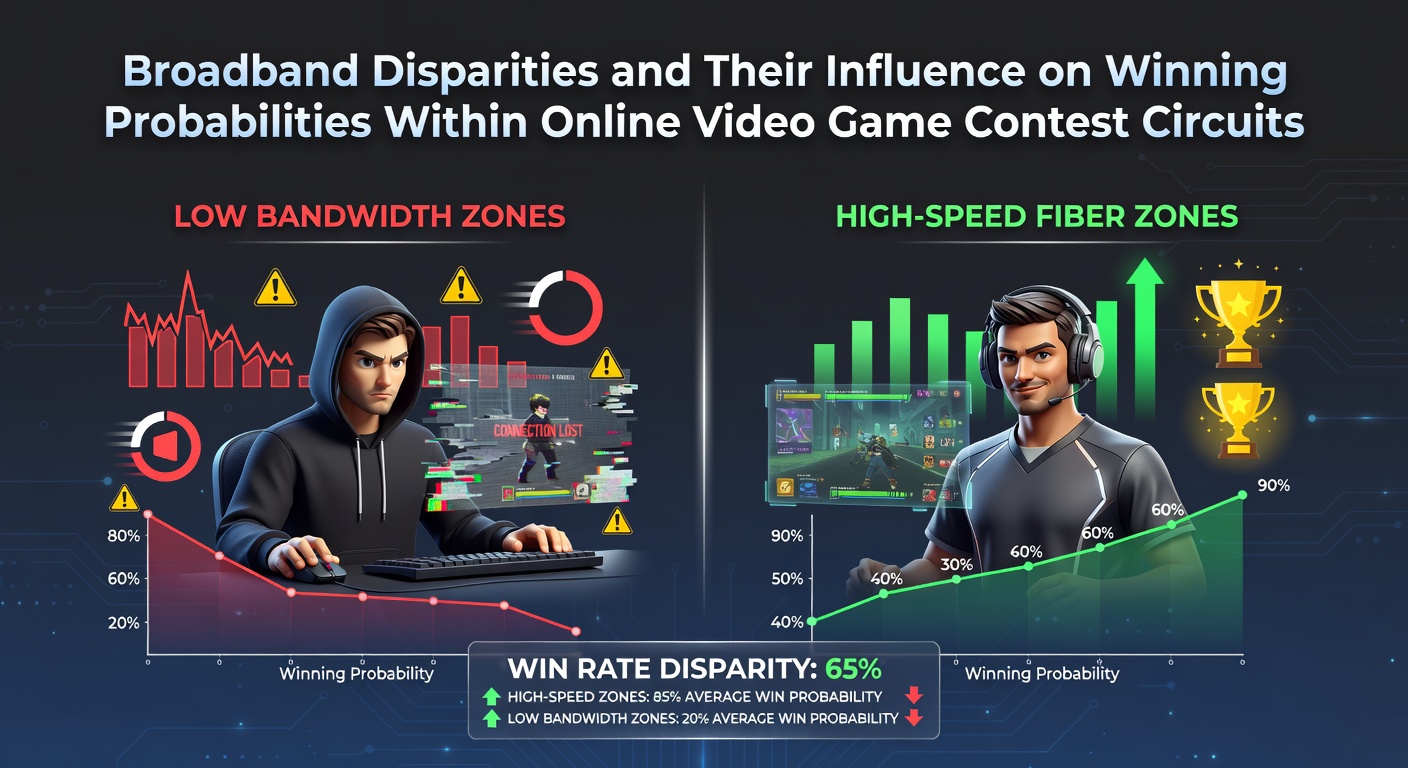
Online video game contest circuits have expanded rapidly in recent years, yet participation outcomes often hinge on factors beyond player skill or strategy, including the quality of internet connections that determine response times and data transmission rates. Research indicates that broadband disparities create measurable differences in performance during real-time competitive events where milliseconds separate winners from eliminated entrants. Data from regulatory agencies shows uneven infrastructure development across urban, suburban, and rural zones, which directly correlates with entry success rates in tournaments hosted on platforms requiring stable low-latency links.
Latency Patterns and Competitive Outcomes
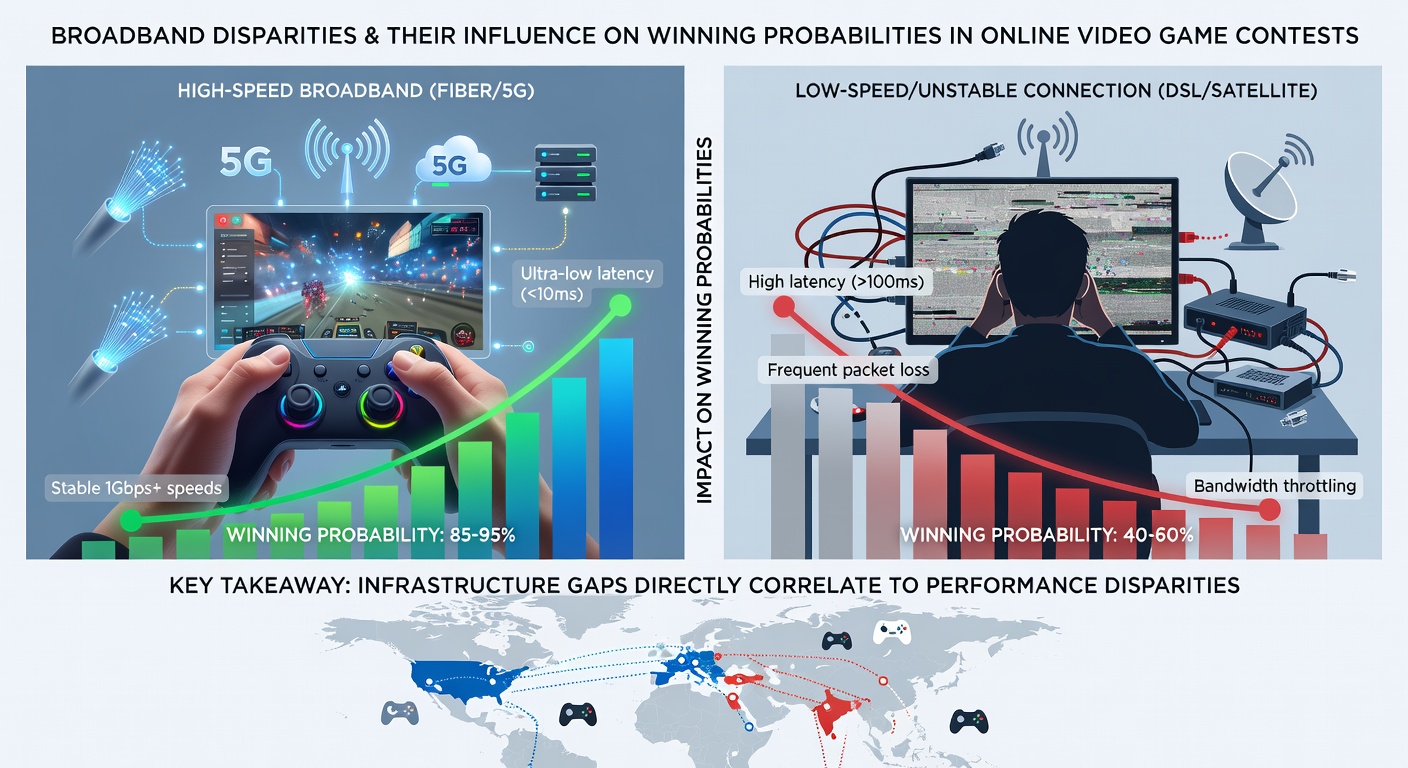
High ping values and packet loss interrupt gameplay sequences in fighting games, battle royales, adn racing simulations that dominate many contest formats, leading to dropped inputs or delayed actions that reduce advancement chances. Observers note that contestants operating on connections below 50 Mbps download speeds encounter higher failure rates during qualification rounds compared to those accessing fiber or cable networks exceeding 200 Mbps. Studies from academic institutions reveal these technical gaps compound over multiple matches, shifting overall win probabilities by margins that range from 15 to 30 percent depending on the game engine and server location.
Regional variations appear consistently in participation logs from major circuits, where players in well-served metropolitan areas submit more consistent results than those relying on satellite or DSL services common in remote districts. According to reports compiled by the Federal Communications Commission, approximately 21 percent of rural households in the United States still lack access to broadband speeds adequate for uninterrupted online sessions as of early 2026. Such limitations force competitors to either drop out mid-event or accept elevated risk of technical disqualifications.
Infrastructure Data Across Jurisdictions
International comparisons highlight similar divides, with Canadian regulatory analyses indicating that northern territories experience average latencies double those recorded in southern provinces during peak gaming hours. European Union statistics demonstrate that while western member states maintain widespread gigabit coverage, eastern regions continue to report gaps that influence cross-border tournament entries. These patterns extend to contest circuits that aggregate participants from multiple continents, where server routing favors low-latency zones and inadvertently disadvantages entrants from underserved networks.
Industry associations tracking esports metrics have documented correlations between connection quality and prize distribution, noting that top placements in June 2026 qualifier events clustered among regions with documented high-speed penetration above 85 percent. One analysis of mobile and console circuits found that entrants using 5G fixed wireless in urban cores achieved completion rates 22 percent higher than those on legacy copper lines. Researchers continue to map these variables against entry volumes to isolate infrastructure effects from demographic influences.
Adaptation Strategies and Circuit Adjustments
Contest organizers have introduced measures such as regional server clustering and ping-based matchmaking tiers to mitigate some effects, yet these adjustments do not fully equalize opportunities across all broadband tiers. Tournament software logs show that adaptive compensation algorithms reduce but do not eliminate the performance differential between high-bandwidth and constrained connections. Participants in affected areas often report shifting to wired ethernet where possible or timing entries during off-peak windows, though these workarounds yield variable results depending on local network congestion levels.
University-led investigations into contest data sets further isolate broadband as an independent variable, controlling for device specifications and player experience. Findings indicate that even when hardware remains comparable, connection stability accounts for a substantial portion of outcome variance in elimination-style brackets. Circuit administrators have begun publishing aggregate connectivity reports alongside results to increase transparency around these dynamics.
Emerging Developments in 2026
Expansion projects announced through 2026 aim to close certain gaps, with government funding allocations targeting underserved census blocks in North America and parts of Asia. Early indicators suggest incremental improvements in contest accessibility for previously excluded regions, although full parity remains several deployment cycles away. Industry organizations continue to monitor how these infrastructure upgrades translate into shifts in participation demographics and success distributions within online circuits.
Conclusion
Broadband disparities intersect with contest mechanics in ways that reshape winning probabilities through technical constraints rather than competitive intent alone. Continued data collection from regulatory bodies and research groups provides clearer quantification of these influences across different geographic and technological contexts. As infrastructure evolves, contest circuits may see gradual recalibration of outcome patterns tied directly to connection equity improvements.