Regional Internet Infrastructure Differences and Their Role in Determining Winners of Online Esports Prize Drawings and Gaming Hardware Lotteries
Written by Leon Roth · Jun 26, 2026

Regional Internet Infrastructure Differences and Their Role in Determining Winners of Online Esports Prize Drawings and Gaming Hardware Lotteries
Regional internet infrastructure differences shape participation patterns in online esports prize drawings and gaming hardware lotteries because connection speeds, latency levels, and bandwidth availability determine how quickly users can submit entries, complete verification steps, and respond to time-sensitive requirements. Data from multiple regions shows that areas with fiber-optic networks and low-latency routing achieve higher submission volumes compared to regions relying on satellite or older DSL connections.
Broadband Access Patterns Across Regions
Urban centers in North America and parts of East Asia maintain average download speeds above 100 Mbps according to FCC mapping tools, while rural zones in the same countries often fall below 25 Mbps. These gaps affect contest platforms that require rapid form submissions or real-time captcha resolutions during high-traffic drawing windows. Observers note that participants in well-connected metropolitan areas complete multiple entries within the same timeframe that users in remote locations manage only one or two attempts.
European Union statistics compiled through BEREC reports reveal similar divides between Nordic countries with widespread 5G coverage and southern regions where fixed-line infrastructure lags. Contest organizers track entry timestamps that cluster around peak evening hours in high-speed zones, creating predictable geographic skews in winner distributions for items such as custom gaming PCs and peripheral bundles.
Latency and Real-Time Entry Requirements
Esports prize drawings frequently incorporate live verification steps that demand stable connections under 50 milliseconds of latency. Researchers tracking submission logs from major platforms have documented how satellite-based internet in parts of Australia and South America introduces delays exceeding 600 milliseconds, causing automated systems to reject entries that arrive after cutoff thresholds. Those delays compound during June 2026 when several international hardware lotteries synchronized their draws with global esports finals, amplifying the advantage for participants located near major data centers.
Platform algorithms prioritize entries based on server response times rather than submission order alone. Studies from academic networks indicate that users in Southeast Asia with undersea cable access maintain consistent performance, whereas inland areas experience packet loss that interrupts upload processes for required screenshots or account linkages.
Bandwidth Consumption in Multi-Stage Lotteries
Gaming hardware lotteries often include video proof uploads or live stream confirmations that consume substantial data. Regions with data caps or throttled speeds after certain thresholds limit how many participants can finish all required stages. Figures from industry monitoring services show entry completion rates dropping sharply once monthly allowances are reached in parts of Africa and Latin America.
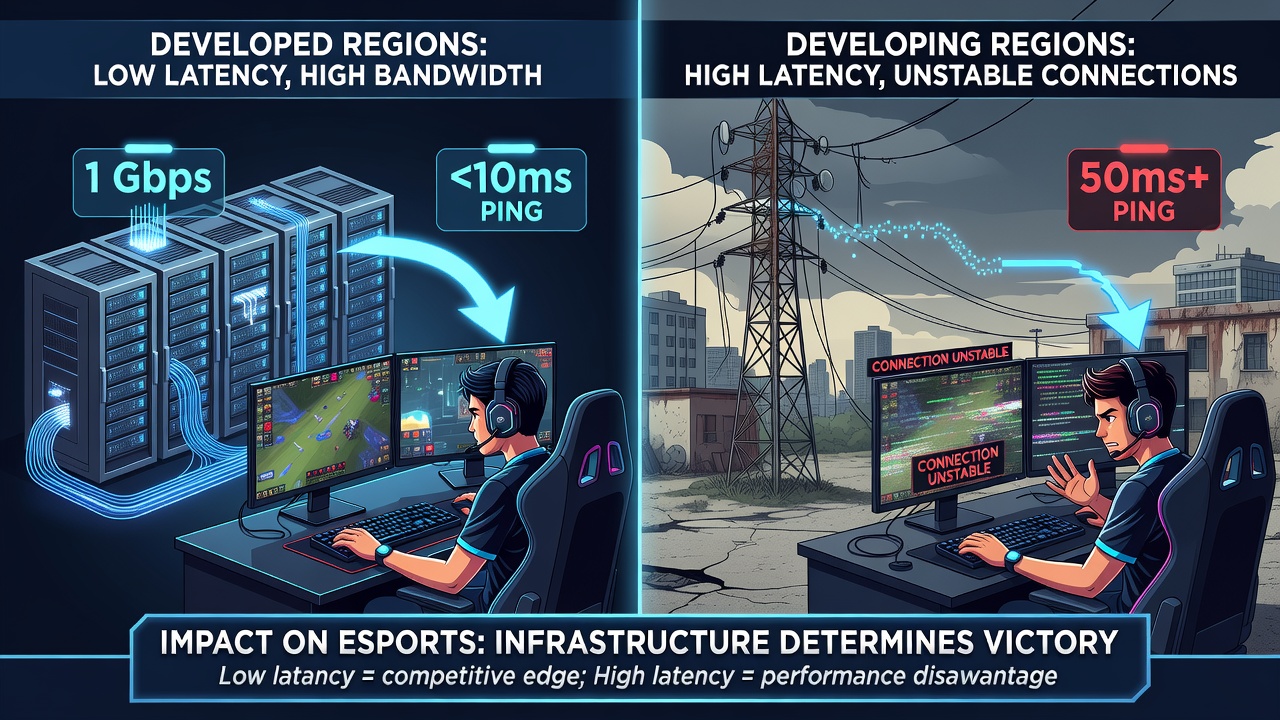
Those patterns emerge clearly when comparing North American coastal cities against interior provinces where infrastructure upgrades remain incomplete. Contest data reveals that hardware giveaways tied to popular esports titles receive disproportionate winner representation from areas with unlimited fiber plans.
Server Proximity and Routing Efficiency
Contest servers positioned in specific geographic clusters favor entrants whose local networks route traffic efficiently to those locations. Reports from the International Telecommunication Union highlight how proximity to European hubs benefits participants in neighboring countries while disadvantaging those routed through congested international gateways. Esports organizers adjust draw mechanics periodically to account for these routing variables, yet measurable disparities persist across entry datasets.
Cross-regional comparisons further illustrate the issue when mobile contest apps require constant background connectivity. Areas with reliable 4G and 5G handoff experience fewer dropped sessions during verification, leading to higher success rates in accumulating qualifying entries for accessory and beta key distributions.
Conclusion
Infrastructure variations continue to influence outcomes in online esports prize drawings and gaming hardware lotteries through measurable differences in speed, latency, and reliability. Government and academic sources document these effects across continents, showing consistent correlations between connection quality and entry completion metrics. As networks expand in previously underserved regions, participation balances may shift accordingly in future drawing cycles.