Seasonal Shipping Patterns Reshaping Delivery Schedules for Remote Gaming Hardware Prizes
Written by Henrik Müller · Aug 26, 2026
Seasonal Shipping Patterns Reshaping Delivery Schedules for Remote Gaming Hardware Prizes
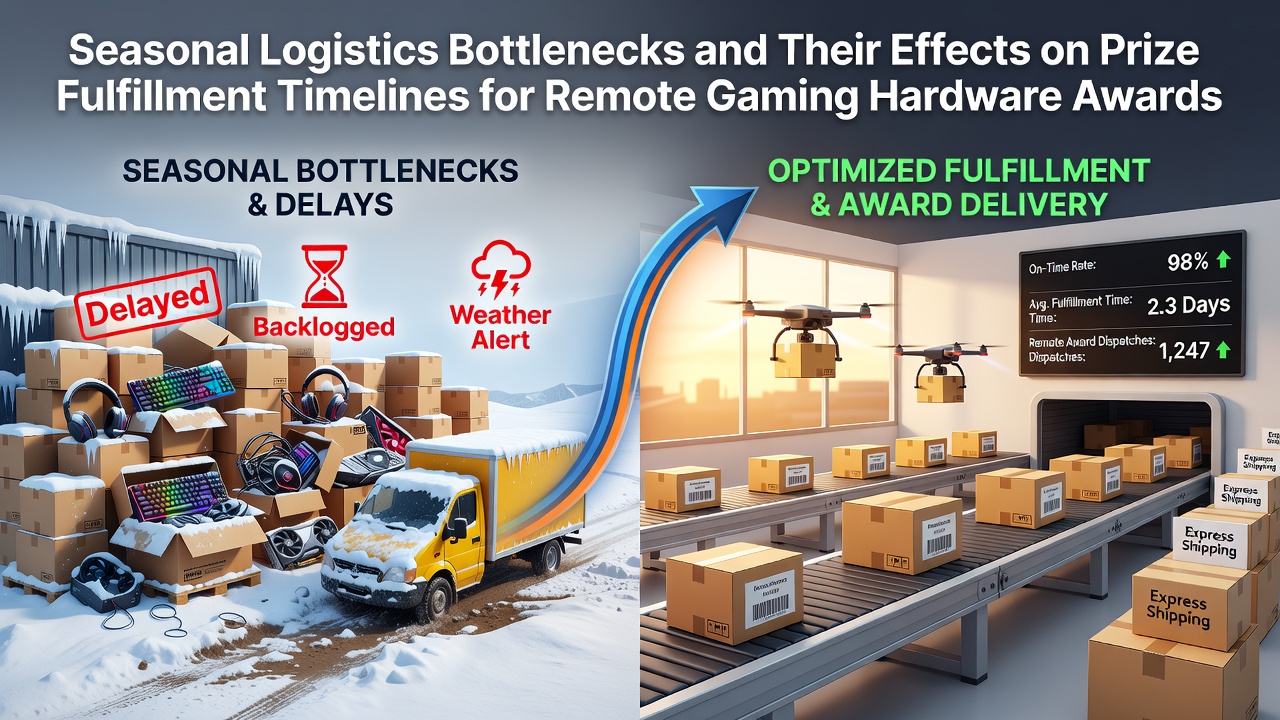
Seasonal shifts in transportation networks generate measurable extensions in the time required to deliver gaming hardware awards to winners situated far from distribution centers, with patterns repeating across multiple years according to industry reports. Peak demand periods coincide with weather events and infrastructure strain, producing backlogs that stretch standard fulfillment windows from weeks into months for certain locations. Data collected by transport monitoring agencies shows these delays concentrate in specific months when consumer shipping volumes surge while capacity remains fixed.
Peak Periods Driving Capacity Constraints
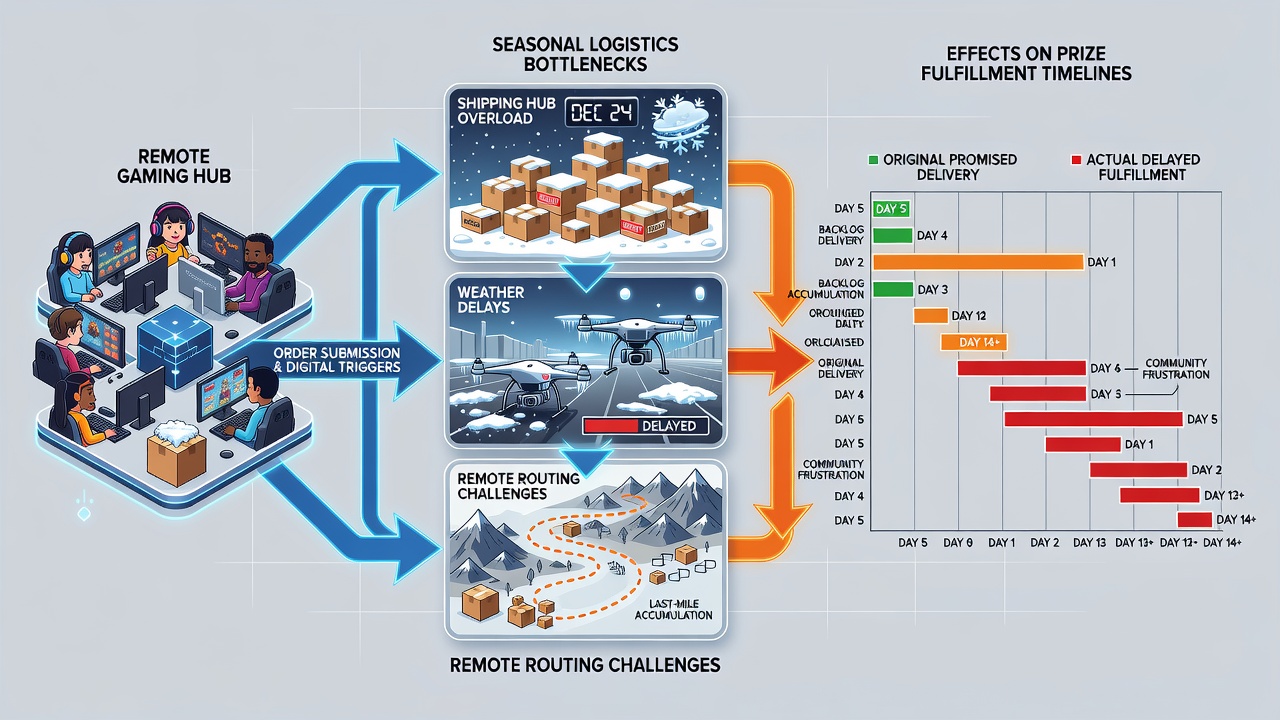
December through January stands out as the period when parcel volumes climb sharply due to holiday retail activity, forcing carriers to prioritize high-volume routes and deprioritize individual prize shipments destined for isolated addresses. Summer months bring additional pressure from back-to-school promotions and increased travel-related logistics, while late summer patterns observed in 2025 carried forward into planning cycles for August 2026 with similar volume spikes projected. Observers note that remote winners experience the longest waits during these windows because carriers consolidate loads to maximize efficiency on main corridors first.
Weather compounds these volume issues when snow, flooding, or extreme heat disrupts rail and road links in northern and mountainous regions. Government statistics from Transport Canada document repeated winter closures on key highways that serve rural gaming communities, extending transit times by an average of 18 days for oversized items such as gaming PCs and console bundles. Similar records from the Australian Bureau of Infrastructure and Transport Research Economics highlight comparable disruptions during cyclone season in coastal zones.
Hardware Characteristics and Handling Requirements
Gaming hardware prizes often include fragile components and lithium-ion batteries that trigger additional inspection protocols at sorting facilities. These items require specialized packaging and sometimes temperature-controlled transport, narrowing the pool of available carriers during high-demand seasons. Research from the European Commission on transport and logistics indicates that battery-related compliance checks add between seven and twelve days to processing timelines when volumes peak, an effect felt most acutely by recipients in areas with limited local distribution hubs.
Regional Disparities in Fulfillment Timelines
Participants in Alaska, northern Canada, and parts of the Australian outback report average delivery intervals of 45 to 70 days for hardware prizes during winter peaks, compared with 14 to 21 days for urban recipients in the same contests. Figures released by Statistics Canada link these extended periods directly to reduced flight frequency and road access limitations rather than contest volume alone. One documented case involved a custom-built gaming rig awarded in November that reached its recipient only after multiple rerouting attempts across three carriers.
Platform operators have responded by adjusting announcement schedules to avoid releasing high-value hardware draws immediately before known bottleneck months, yet submission data from several major gaming sites still shows elevated entries in September and October that translate into January deliveries for distant winners. Coordination with regional postal services in the European Union has produced modest improvements in tracking granularity, allowing organizers to provide more accurate estimated arrival windows to entrants.
Strategies Observed Across Organizer Networks
Some contest hosts now stage prize pools regionally, pre-positioning hardware in multiple warehouses before winner selection occurs. This approach reduces the distance each item travels once claimed and shortens exposure to seasonal disruptions. Industry analyses from the International Transport Forum confirm that pre-positioning lowers average transit time by 12 to 19 days for remote shipments, though it requires advance capital commitment from organizers. Remote winners benefit most when such measures are applied consistently across quarterly cycles.
Conclusion
Seasonal logistics bottlenecks continue to extend prize fulfillment timelines for remote gaming hardware awards in predictable patterns tied to weather, volume surges, and infrastructure limits. Transport data from multiple jurisdictions demonstrates that these delays concentrate among winners in isolated areas and during specific calendar windows. Organizers who incorporate regional staging and adjusted announcement timing have recorded shorter average delivery intervals, while broader improvements remain dependent on carrier capacity expansions and regulatory coordination across borders.