Timezone Overlaps Reshaping Entry Patterns in Worldwide Mobile Game Raffle Events
Written by Avery Patterson · Jun 22, 2026
Timezone Overlaps Reshaping Entry Patterns in Worldwide Mobile Game Raffle Events
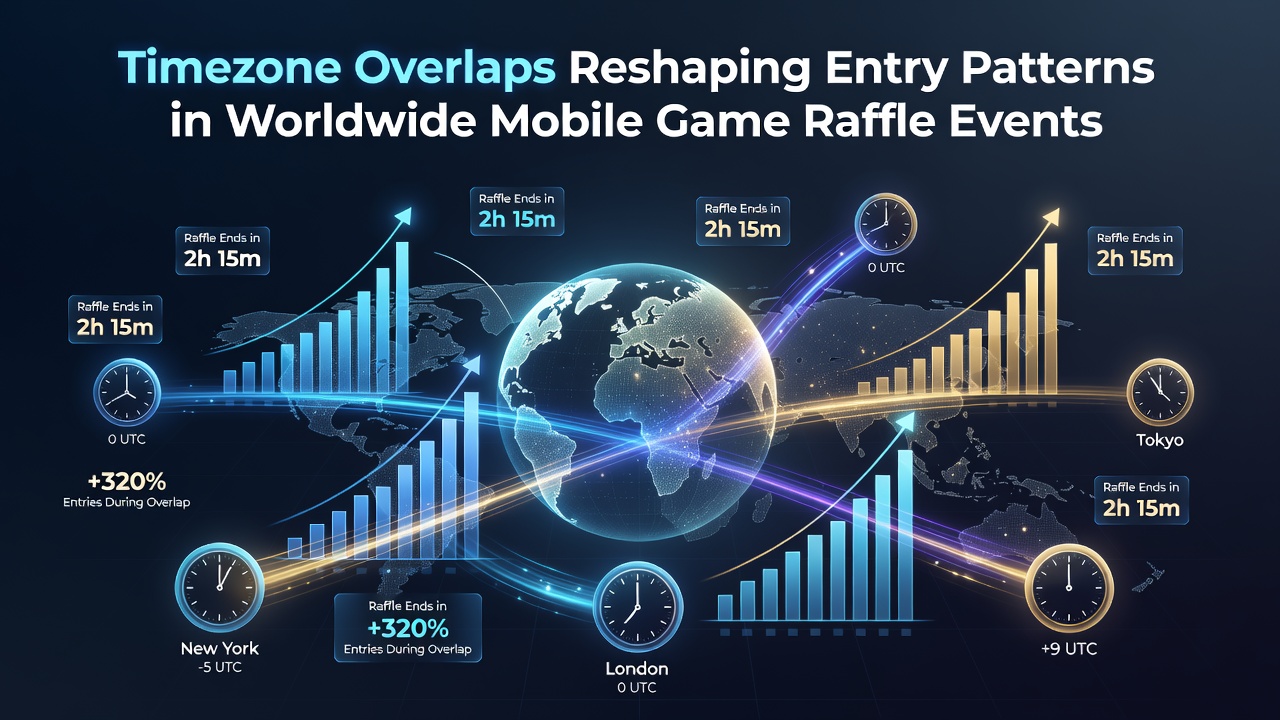
Global mobile game raffle events have experienced measurable shifts in entry timing as participants navigate overlapping time zones across continents, and organizers now track these patterns through timestamped submission logs that reveal concentrated activity windows during specific overlap periods. Data collected from major platforms shows entries clustering between 8 PM and 11 PM in multiple regions simultaneously when Asia-Pacific and European zones intersect, creating brief surges that exceed typical daily averages by substantial margins.
Mapping Overlap Windows in Entry Data
Analysts examining submission records from 2024 through early 2026 have identified recurring peaks that align with natural time zone convergences rather than fixed calendar times, and this pattern holds across events hosted by developers in North America, Europe, and East Asia. For instance, when North American evening hours coincide with early morning activity in parts of Asia, entry volumes rise consistently according to aggregated platform metrics released by industry tracking firms.
June 2026 marks one such period where multiple high-profile mobile title raffles coincided with summer schedule adjustments in several countries, leading researchers to note elevated cross-regional participation that differed from patterns observed in prior years. These overlaps allow participants in one zone to submit entries during what feels like standard evening hours while others engage during morning routines, which flattens traditional geographic barriers in the data sets.
Platform Adjustments to Overlap Trends
Developers have responded by adjusting raffle start and end parameters to account for these convergences, often extending submission windows by several hours to capture the full range of overlap activity without favoring any single region. Mobile app analytics from events in 2025 indicate that staggered closing times based on UTC offsets increased total unique entries compared with fixed global deadlines used previously.
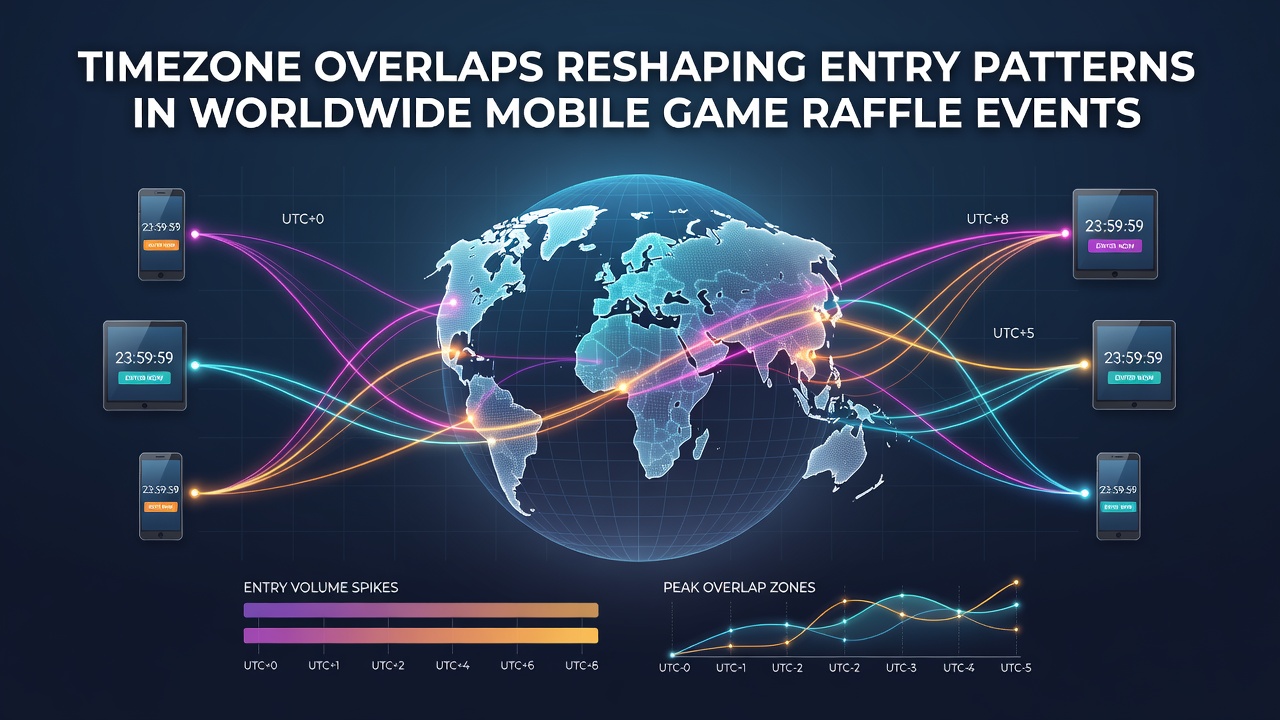
One documented case involved a Southeast Asian developer who shifted a 2025 raffle close from midnight local time to a rolling cutoff that accommodated Pacific and Atlantic overlaps, resulting in submission data showing broader geographic distribution than earlier iterations of the same event series. Observers note that such modifications correlate with higher completion rates for entry forms that require multiple steps, since users encounter fewer cutoffs during their active device hours.
Regional Participation Shifts
Figures from the Interactive Games and Entertainment Association reveal that Australian and New Zealand participants increased their share of entries in global mobile raffles during periods when local afternoon hours aligned with European evenings, demonstrating how overlap windows redistribute engagement across hemispheres. Similar patterns appear in data from South American markets where late-night submissions rise when they coincide with North American prime time.
These changes affect not only volume but also the types of devices used for entries, with mobile analytics indicating higher tablet and secondary device usage during overlap hours compared with peak local times. Researchers tracking these trends point to improved connectivity in emerging markets as an additional factor that amplifies participation once time zone barriers lessen.
Technical and Logistical Factors
Server-side logging of IP addresses and device time settings allows organizers to map exact overlap contributions without relying on self-reported locations, and this precision has led to refined targeting of push notifications timed to hit multiple zones at once. Reports compiled by academic groups at institutions studying digital participation, including work referenced through the University of Sydney's gaming research initiatives, confirm that notification timing aligned with overlaps produces measurable upticks in form completions.
Yet the same data sets show that excessive clustering during narrow overlap windows can strain verification systems, prompting some platforms to implement queue management that spreads processing across the full overlap duration. This approach maintains fairness while preventing bottlenecks that previously caused entry failures during high-traffic convergence periods.
Conclusion
Timezone overlaps continue to influence entry distributions in worldwide mobile game raffles through documented patterns in submission timing and geographic spread, with June 2026 serving as a recent benchmark for observing these effects at scale. Platform adaptations and refined analytics have allowed organizers to leverage these convergences for broader participation while addressing the technical demands they create, and ongoing data collection from multiple regions supports continued evolution in how events are structured around global clock alignments.